

We supply all the kayaking, safety, camping, and cooking gear for a great trip, including rubber boots, raingear, and sleeping bags! You just need to bring a few changes of warm clothes and a few accessories.
What you will need to bring:
While some of the items in the packing list are strictly optional, others are essential for your comfort and safety.
In order to fit both you and your gear into your kayak
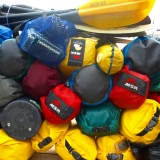
Ready to go
comfortably, plan on packing your clothing into a waterproof dry bag which is 24″ x 9″ in diameter. We’ll provide these bags. You should also bring a daypack (small backpack or fanny pack), for miscellaneous articles. Your day pack should be small enough to fit comfortably on your lap or between your legs while paddling. We also provide a small dry bag which can be kept handy throughout the trip for those often used items (binoculars, small camera, hat, glasses, etc.). This dry bag can be kept inside the kayak or clipped to the outside deck for easy access.
We will provide storage for any luggage you cannot take on the expedition.
Packing List
Clothing. Be sure to bring enough warm clothes. Thermal underwear is highly recommended.
Dress in layers for maximum flexibility. Bring an extra layer you do not really think you will need.
- Underwear. Your regular underwear is fine.
- Long Underwear. Polypropylene or wool — not cotton.
- Wool Socks. Bring several pair — enough to change your socks each day.
- Pants. A synthetic pair like Polartec™ or Synchilla™. Bring one pair other than what you are wearing to be used as a reserve.
- Shirts. Warm long-sleeved wool or synthetic. One or two depending on length of trip.
- Other Shirts. Short-sleeved or T-shirts. Two or three for longer trips.
- Comfortable Shoes. A pair of sandals or Crocs won’t take up much space and are great for around camp.
- Sweater or Fleece Jacket. If you tend to be cold, you should bring two or more insulation layers.
- Rain Gear. We provide coated-nylon rain gear — bibs and jacket with hood. If you have raingear, you are welcome to bring it.
- Warm Hat. Should be wool or synthetic and cover ears (not a baseball hat).
- Gloves. Lightweight neoprene diver’s gloves work well for paddling.
- Shorts. For sunny days!
Equipment
The equipment you bring always fills the space available for it! If it doesn’t fit in your daypack or dry bags, you can leave it in Gustavus.
- Day Pack. A day pack is great for keeping things close by in your kayak, and on short walks or hikes.
- Sunglasses. One pair — polarized sunglasses allow you to see into the water.
- Binoculars. For respectful, non-intrusive wildlife viewing.
- Medications. Please bring an extra supply of any medications you depend on, so that you are sure to have a protected supply in our waterproof first aid kit.
- Toiletry Items. Toothbrush, comb or small brush, personal items, etc. It is best not to bring overly-scented soaps, sprays, and lotions — as they might attract wildlife.
- Miscellaneous. A cap with sun visor, pocket knife, camera, extra batteries, flashlight or headlamp, bandanna, small pack-towel or washcloth, personal fishing gear, reading and writing materials, and several zip-lock bags to keep items dry.

My trip with Spirit Walker Expeditions was amazing. My experience kayaking among the whales is something I will never forget! Go! You will love it.
We had a wonderful experience on a Spirit Walker trip this summer. Six nights, seven days in the Myriad Islands Wilderness. The trip was well organized, the gear was top quality and the guides were great! ... an experience I'll always remember.
Hearing the whales and having them come up so close to you is a once in a lifetime feeling.
We booked the Whales tour to Point Adolphus for our family which includes a 6 year old and 9 year old... Great safety orientation for our boys who don't have a lot of experience kayaking. Thanks for an unforgettable experience.
It doesn't get any better than this. If you want to experience the real Alaska you must get out on the water... If we return to Alaska, we will make this expedition again.
"Magic Family Holiday" I can't say enough about the wonderful trips that Spirit Walker puts together. The safety and equipment is great. The guides are great fun and knowledgeable about the areas we went. The food is incredible.